The most effective retaining wall styles Georgia homeowners choose are concrete blocks, natural stone boulders, and landscape timber. Masonry options like block and stone provide superior durability for red clay soil, often lasting forty years or more; meanwhile, timber remains a popular choice for budget-conscious or smaller-scale projects.
Homeowners across Georgia often face the frustration of steep slopes and eroding red clay, which can turn a beautiful backyard into an unusable, muddy decline. Beyond the loss of functional space, failing to address these grades puts your foundation and landscape at risk. Choosing the right material for a retaining wall is not merely an aesthetic decision; it is a critical structural investment that must withstand the unique pressure of Georgia soil. In this guide, we evaluate the performance of segmental blocks, natural boulders, and pressure treated lumber to help you determine the best fit for your property. You will also learn about essential drainage solutions, local permit requirements, and the cost factors that shape a successful installation.
Why Retaining Wall Material Choice Matters in Georgia
Across Georgia, the landscape is defined by rolling hills and dense, heavy red clay. While these features provide scenic views, they present significant challenges for property owners. The combination of steep grades and clay soil, which expands and gains immense weight when saturated, means that a retaining wall is rarely a purely cosmetic addition. Instead, it serves as a critical structural component. A properly engineered wall is essential for preventing erosion, managing runoff, and reclaiming sloped land to create functional yard space.
Selecting from the various retaining wall styles Georgia homeowners have available requires an understanding of how materials interact with our local geology. Choosing the wrong material or an improper installation method often leads to wall failure within just a few years due to hydrostatic pressure. At Green and Gold Landscape, we specialize in three primary systems designed to handle the demands of Metro Atlanta's soil and slopes: heavy duty commercial grade segmental blocks, rugged natural fieldstone boulders, and cost effective pressure treated timber.
Each material offers a different balance of longevity, cost, and aesthetics. While timber provides an accessible entry point for lower walls, commercial block and natural stone offer a lifespan of 50 years or more when paired with professional drainage and grading solutions. Our approach to hardscape construction services ensures that every project starts with a site specific analysis to determine which structural style best suits your property’s topography and long term goals.
Commercial 80 lb Segmental Block Walls: Maximum Strength and Precision
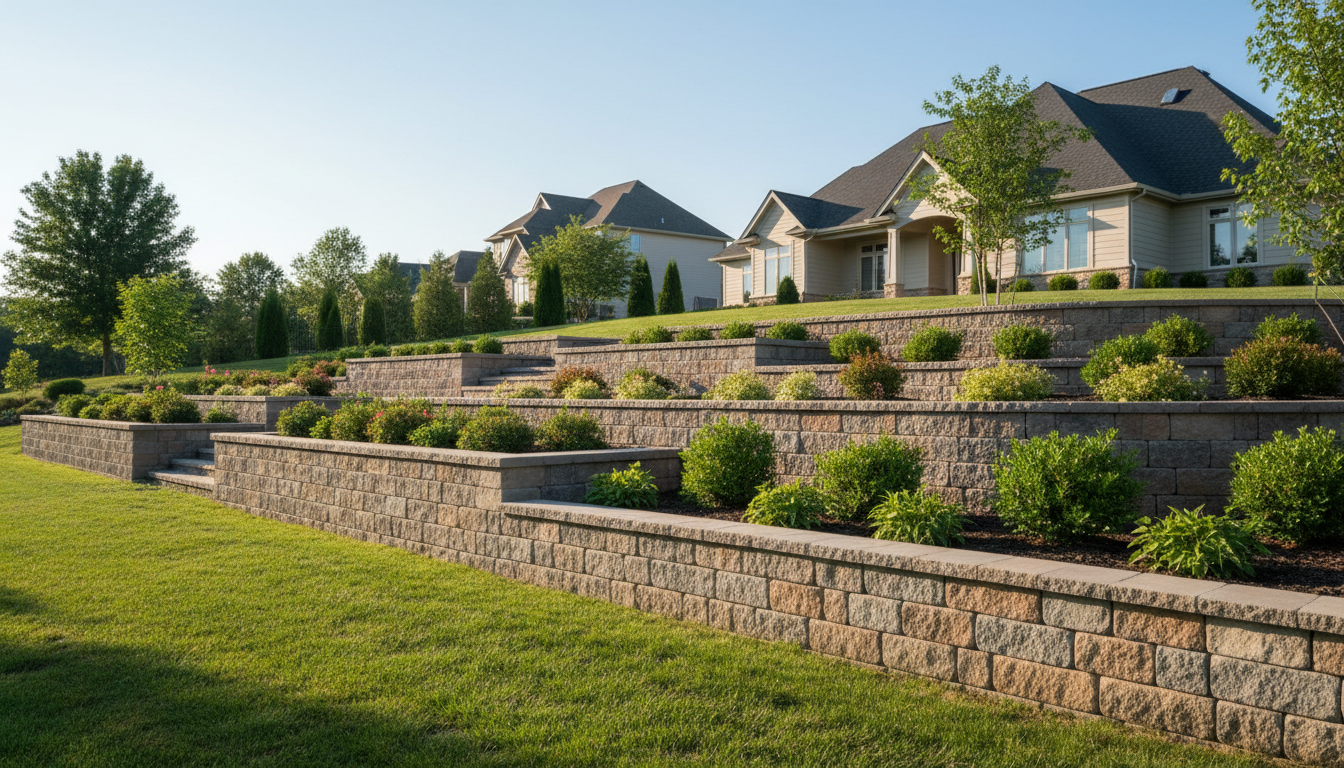
For homeowners requiring structural performance that matches the severity of their property’s slope, commercial-grade segmental block walls represent the pinnacle of engineering. Unlike the lightweight blocks found at big-box retailers, which often weigh between 20 and 40 pounds, our professional installations utilize heavy-duty units that weigh 80 pounds or more. This massive unit weight is the primary defense against the immense lateral pressure exerted by wet Georgia red clay, which can swell and push with incredible force during the rainy season.
These blocks utilize a mechanical interlocking system, typically involving a rear-lip or a fiberglass pin, which ensures every course is physically connected to the one below it. This creates a monolithic structure that relies on gravity and friction rather than mortar, allowing the wall to flex slightly without cracking. When evaluating different retaining wall styles Georgia residents often prioritize longevity; these commercial systems provide a 50 year lifespan when supported by proper drainage and grading solutions.
Feature | Commercial Segmental Block | Retail-Grade Block |
|---|---|---|
Unit Weight | 80+ lbs | 20–40 lbs |
Typical Wall Height | Up to 40+ ft (with engineering) | 2–3 ft maximum |
Service Life | 50+ Years | 10–20 Years |
Connection Method | Pin or Lip Interlock | Gravity and Friction |
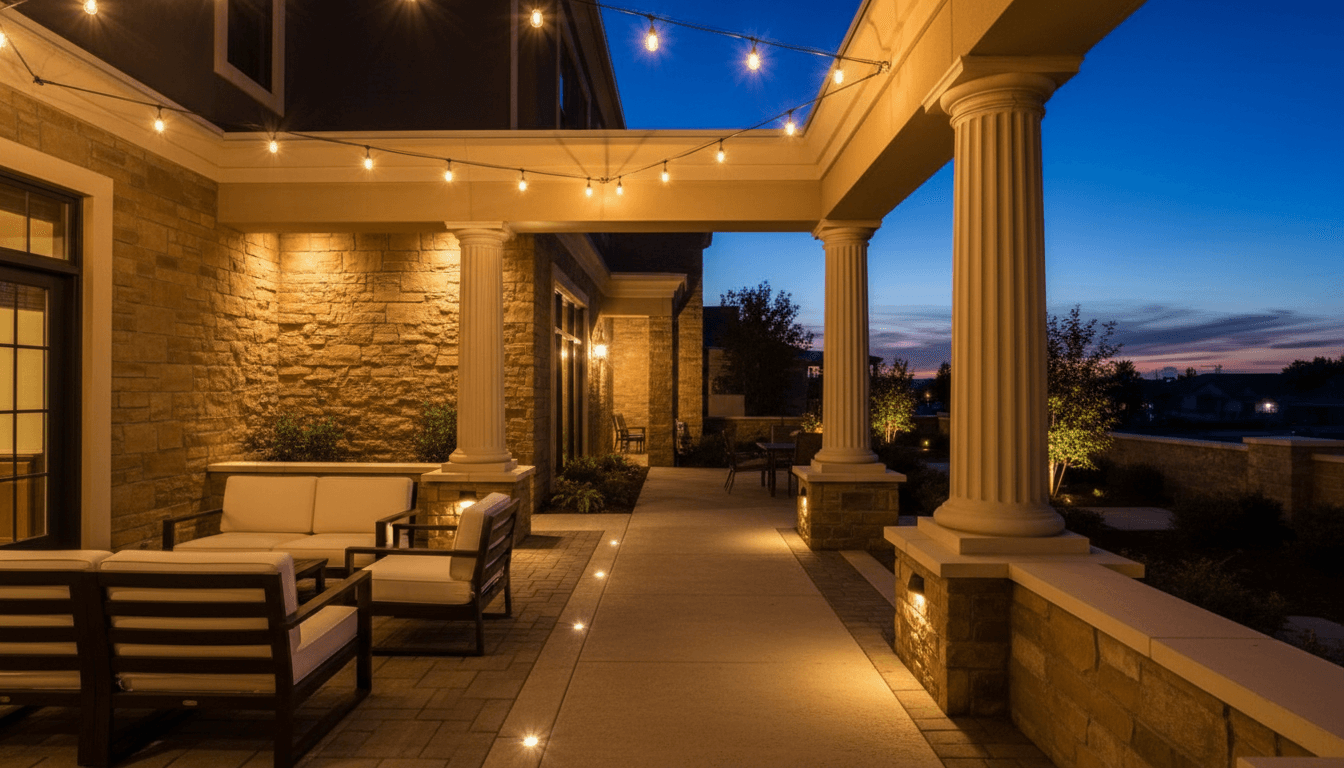
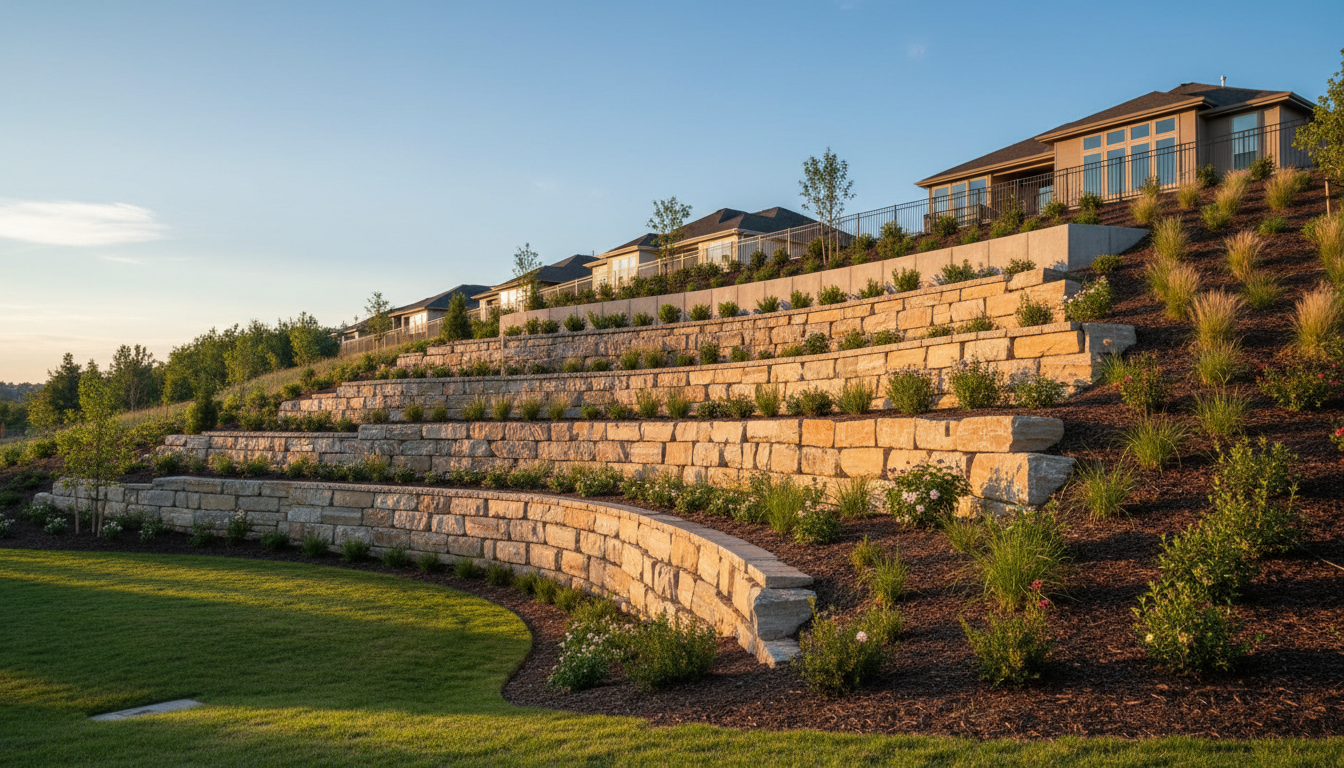
The aesthetic result is one of precision and clean, modern lines. The uniform dimensions of the block allow for crisp corners and perfectly level caps that complement contemporary hardscape construction services. Because these blocks are designed for industrial-strength applications, they easily accommodate integrated features such as built-in steps, seating walls, and recessed LED lighting. This makes them the ideal choice for creating multi-tiered outdoor living spaces where both safety and high-end design are paramount. By selecting heavy-duty blocks, we can build significantly taller walls than other methods allow, effectively turning unusable hillsides into expansive, flat plateaus for recreation.
Natural Fieldstone and Boulder Walls: The Timeless Georgia Look
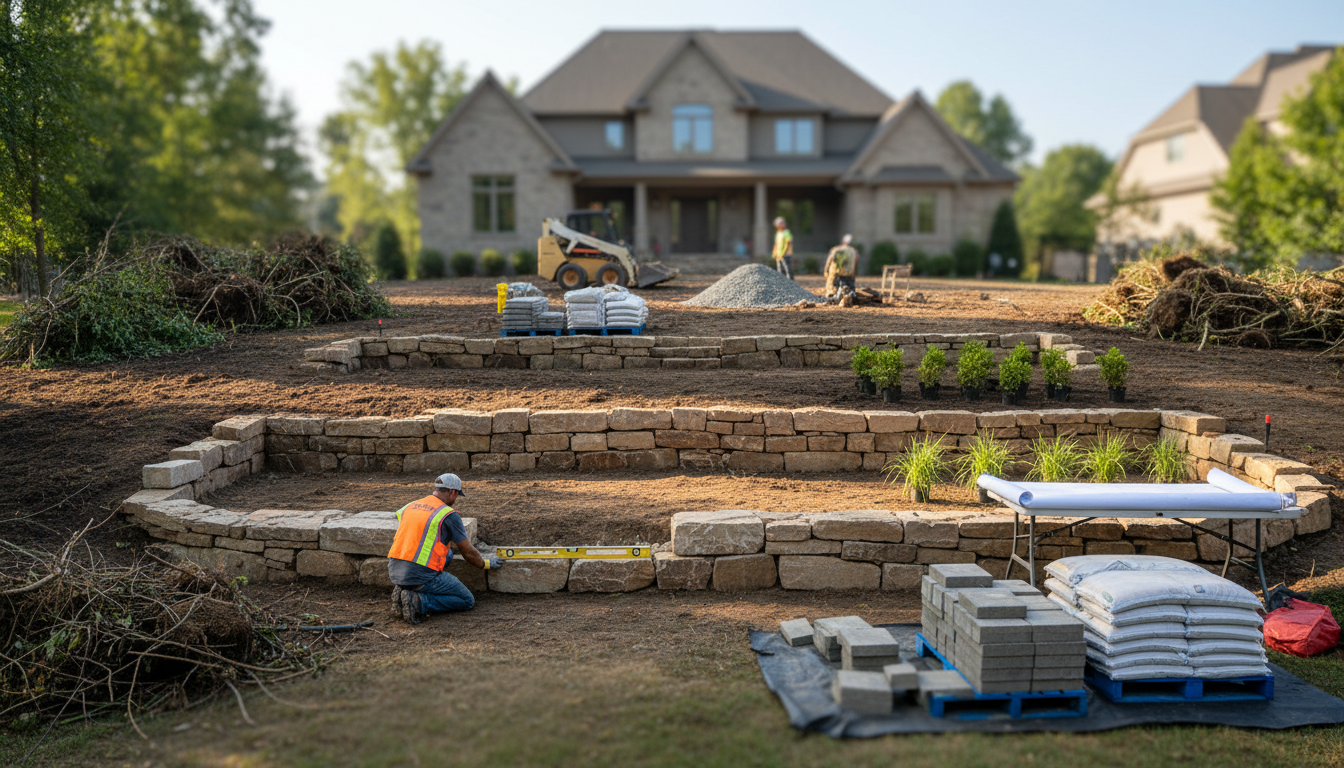
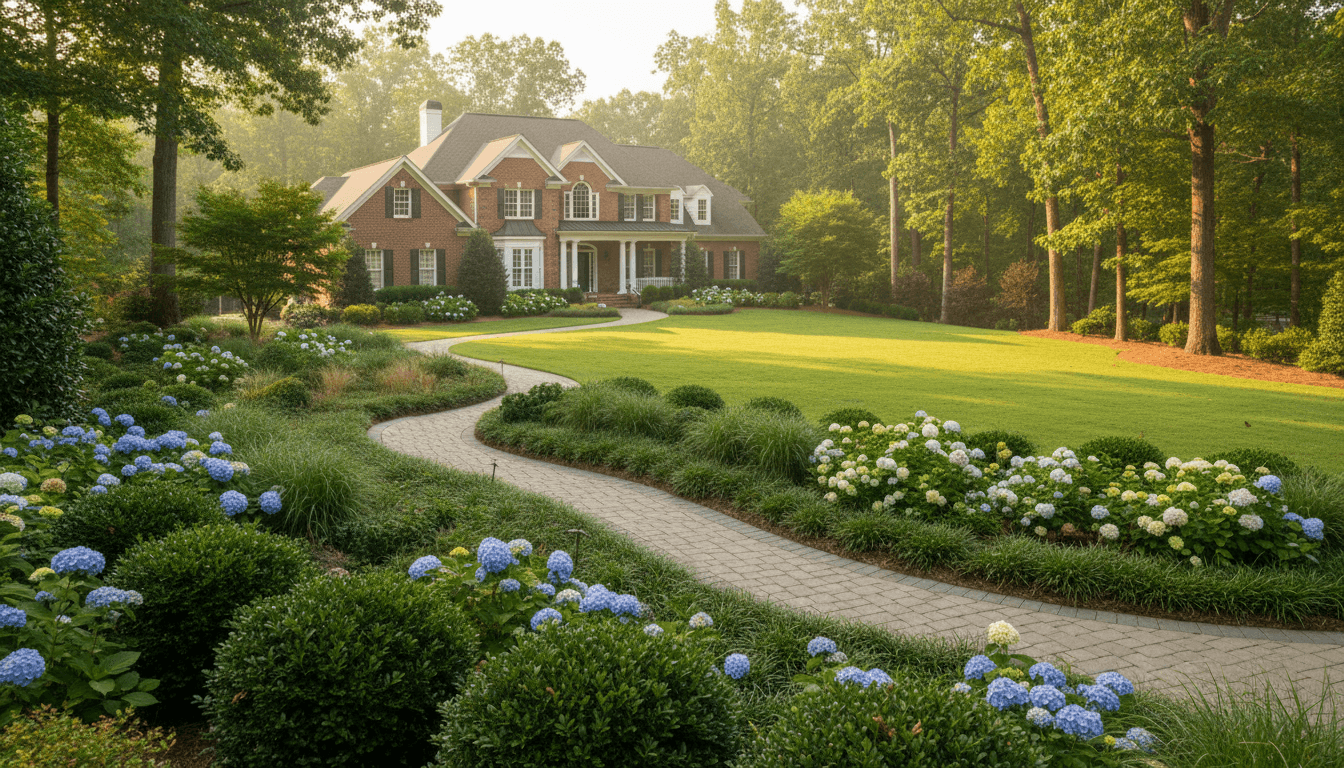
For homeowners seeking to harmonize their property with the rugged terrain of Georgia, natural fieldstone and boulder walls offer an unmatched aesthetic. While segmental blocks provide industrial precision, boulder walls rely on massive weight and individual character to secure a hillside. This approach fits seamlessly into the woodland and estate style properties common throughout our service area, using materials that look as though they have been part of the landscape for centuries.
The primary advantage of using natural stone is the permanence it provides. Each boulder, often weighing hundreds or even thousands of pounds, acts as its own anchor. Unlike manufactured systems that require precise leveling of every unit, a boulder wall is a puzzle of geometry. Our custom landscape design process focuses on selecting stones with the right faces and shapes to ensure structural stability while maintaining that organic, hand-stacked appearance.
Feature | Natural Boulder Walls |
|---|---|
Primary Material | Native Georgia fieldstone or granite boulders |
Visual Style | Rugged, irregular, and organic |
Drainage Profile | Natural weep holes between stone gaps |
Best Use | Large-scale embankments and woodland estates |
Functionally, boulder walls offer a unique advantage regarding water management. The natural gaps between stones allow for immediate pressure relief, acting as built-in weep holes for groundwater. However, this does not eliminate the need for professional drainage and grading solutions. Proper placement requires heavy machinery and an expert eye to ensure each stone is keyed into the slope. Without professional interlocking and a solid base, the sheer weight of the stones can cause shifting or settling over time. When executed correctly, these hardscape construction services result in a wall that is not only a functional retaining structure but also a timeless focal point of the property. For those exploring different retaining wall styles Georgia offers, the boulder wall remains the gold standard for blending engineering with natural beauty.
Pressure Treated Timber and Lumber Walls: The Cost Effective Solution
Timber walls are frequently selected for their immediate cost effectiveness and relatively simple installation process. In many residential projects across our service area, 6x6 pressure treated timbers provide a functional way to terrace a yard or manage minor soil movement without the higher upfront investment of masonry. However, transparency regarding longevity is vital. Unlike the stone and block systems discussed previously, which can last a half-century, timber walls in Metro Atlanta's humid climate typically have a service life of 10 to 15 years. Over time, the constant moisture in the red clay leads to inevitable rot and structural degradation.
To maximize the stability of these structures, our hardscape construction services utilize a deadman anchoring system. This involves placing timbers perpendicular to the wall face, extending deep into the backfilled hillside. These anchors are secured with large spikes or rebar, using the weight of the compacted soil above them to prevent the wall from bowing or leaning outward under lateral pressure.
Feature | Pressure Treated Timber (6x6) |
|---|---|
Average Lifespan | 10–15 Years |
Relative Cost | Lowest Entry Point |
Structural Support | Deadman Anchors |
Ideal Height | 4 Feet or Less |
This approach is highly recommended for homeowners who may be planning a shorter stay in their current residence or for low height decorative tiers. Because wood is porous, ensuring proper drainage and grading solutions is even more critical than with stone. Without a dedicated gravel chimney and perforated pipe, trapped water will accelerate wood rot significantly. For those weighing various retaining wall styles Georgia offers, timber remains a practical choice when budget and short to medium term goals are the primary drivers of the project.
Addressing the Red Clay: Why Drainage is Non Negotiable
Regardless of which of the retaining wall styles Georgia homeowners select, the structural integrity of the project hinges on one factor: water management. Across the state, the primary cause of wall failure is hydrostatic pressure. When our dense red clay becomes saturated, it expands and exerts thousands of pounds of lateral force against the back of a structure. Without a dedicated exit path, this trapped water will eventually cause even the heaviest blocks or stones to lean, shift, or collapse entirely.
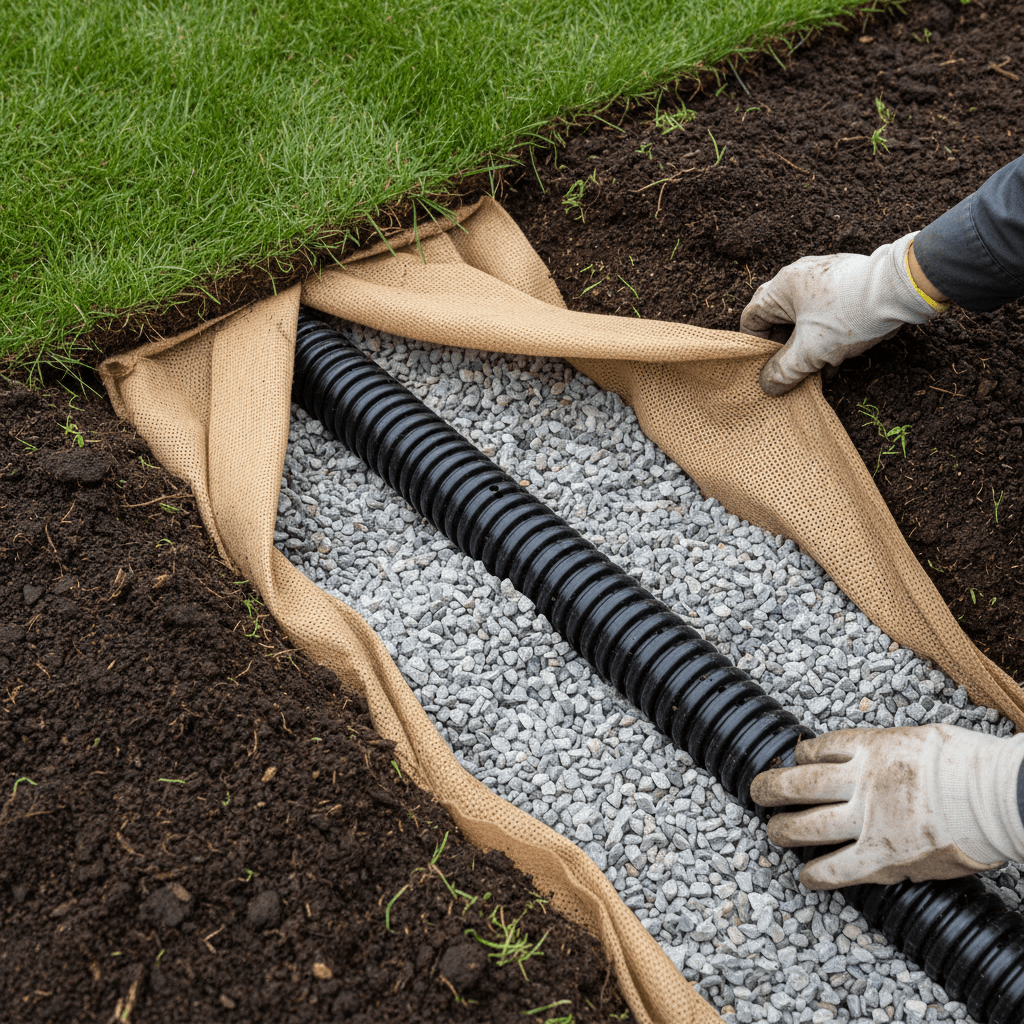
A professional installation must include a multi-layered drainage system designed to neutralize this pressure. We begin by installing a "drainage chimney," which is a vertical column of clean, angular gravel placed directly behind the wall units. To ensure this gravel remains effective for decades, we wrap it in a heavy duty geotextile filter fabric. This fabric acts as a barrier, allowing water to pass through while preventing fine clay particles from migrating into the gravel and clogging the system.
Component | Purpose in Red Clay Soils |
|---|---|
Perforated Drain Pipe | Collects subsurface water and directs it to a safe discharge point |
Angular Gravel Backfill | Provides a high-porosity path for water to reach the drain pipe |
Geotextile Filter Fabric | Prevents soil silt from contaminating and clogging the drainage zone |
Compacted Soil Cap | Sheds surface water away from the top of the wall to reduce infiltration |
At the base of the gravel column, we install a perforated drain pipe pitched to "daylight," meaning it exits at a lower point on the property. This is a vital component of broader drainage and grading solutions that protect your home's foundation from erosion. By integrating these technical details into our hardscape construction services, we ensure that your custom landscape design remains as stable as it is beautiful, even during the heaviest North Georgia rain cycles.
Permits and Regulations for Georgia Retaining Walls
Navigating the legal requirements for soil retention is a critical step in any custom landscape design. Across Georgia, the most frequent question homeowners ask is whether a permit is necessary. Generally, any retaining wall exceeding four feet in height, measured from the bottom of the footing to the top of the cap, requires a building permit and a plan stamped by a licensed structural engineer. This threshold exists because taller walls carry significant risk; a failure can jeopardize property lines, home foundations, or personal safety.
For natural stone gravity walls, we often reference the 1/3 rule to ensure structural integrity. This engineering guideline suggests that the depth of the wall base should be at least one third of the wall's total height. For example, a six foot boulder wall requires a base depth of at least two feet to provide the necessary mass to counter the lateral pressure of the soil.
Our hardscape construction services include managing these regulatory hurdles from the outset. We ensure that every build adheres to local building codes, including the necessary setbacks and drainage and grading solutions required for permit approval. Working with a professional firm guarantees that your wall is not only aesthetically pleasing but also fully compliant with Cherokee County’s safety standards, protecting your long term investment.
How Much Does a Retaining Wall Cost in Georgia?
The total investment for hardscape construction services depends heavily on material volume and the technical complexity of the site. In North Georgia, timber walls offer the lowest entry point, yet owners must weigh this against the eventual cost of replacement. Commercial block systems occupy a mid-range price point, offering a blend of industrial strength and a 50 year lifespan. Natural boulder walls typically represent the highest investment; the cost is driven by the need for heavy excavators and highly skilled operators to stabilize and set multi-ton stones.
Material Type | Estimated Cost (per Sq. Ft.) | Relative Long-Term Value |
|---|---|---|
Pressure Treated Timber | $25 – $40 | Low (due to rot) |
Commercial Segmental Block | $45 – $75 | High (durability focus) |
Natural Fieldstone Boulders | $50 – $100+ | Very High (permanent) |
Beyond raw materials, the topography of your specific property often dictates the final quote more than the units themselves. A steep slope requires more robust drainage and grading solutions to manage soil pressure. Furthermore, site access is a critical variable. If a backyard has limited space for the massive machinery required for boulder placement, labor hours increase significantly. When developing a custom landscape design, we account for these logistical factors to ensure the chosen retaining wall styles Georgia homeowners prefer are implemented with both fiscal transparency and structural integrity.
Choosing the right retaining wall style, whether you prefer the structure of blocks, the organic look of boulders, or the rustic warmth of lumber, depends on your property’s specific needs and your personal aesthetic. Each material offers a unique way to manage Georgia’s rolling terrain while adding character to your home. If you want expert help deciding which option fits your vision, we can assist with your Landscape Design to ensure your project is both functional and beautiful. Together, we can create a lasting outdoor space for your family to enjoy.